Brand concealment or cover-up graphics can be an economical way of refreshing old fleet. In some cases, the cost of removing old graphics far cannot be justified especially for fleet vehicles, trailers, or tankers nearing the end of their service life.
However, it is also important to note that the appearance of the cover-up graphics will largely depend on the original graphics. Therefore, cover-up graphics will only follow but not improve the application detail of the original graphic. This is especially important to bring up with the client so that proper expectations are set.
Below are some guidelines to increase your probability of success in applying cover-up graphics:
Surface Inspection
The entire surface of the existing graphic must be inspected for the following:
Tented Rivets
If the original graphics completely encapsulate the rivets and are not compromised, you can apply directly over them. However, it is important to note that the new graphics will follow and not prevent any further lifting by the old graphics.
if the original graphics are cracked, broken, or the rivet is in anyway exposed, all loose remnants of the original graphics must be removed including any adhesive residue prior to application.
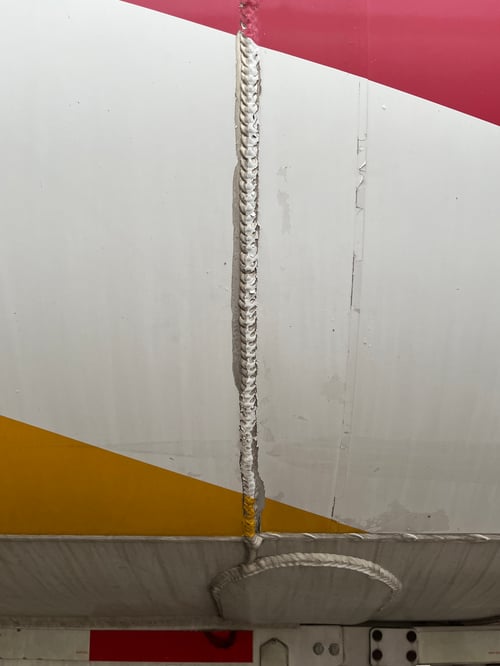
Weld Seams
Graphics over weld seams will lift and crack over time. Therefore, it is not recommended to wrap over them even if heat rolled.
Loose Graphics
All original graphics that are loose due to peeling, abrasion, fraying, poor adhesion, poor initial application or delamination must be completely removed including any adhesive residue prior to application.
Clear Coat Delamination
Any original graphics showing signs of the clear coat peeling, flaking, or oxidation must be completely removed including any adhesive residue prior to application. It is always to be assumed that the delamination of a liquid clear coat is a direct result of a failure caused by the original graphics, which could in turn cause the cover-up graphics to also fail.
Adhesive Residue
Any adhesive residue, separation, or delamination that is exposed must be completely removed and cleaned.
Surface Preparation
-
Begin with cleaning any adjacent hardware, trim, hinges, and components before cleaning the graphics application area. For trailers, the gap between the slats of roll-up doors must be cleaned first.
-
Scrub the entire surface with a water/detergent mixture (one drop of detergent/litre) and rinse with clear water.
-
Allow the surface to dry.
-
Using the Two Towel Method, wipe entire surface with 70% Isopropyl Alcohol (IPA) and follow with a second towel to dry. Dirt does not evaporate with the alcohol, and the second dry towel will pick up any leftover dirt.
-
The Best Practice is to cut back about 1-inch off the edges of the original graphics and completely clean off any dirt and adhesive residue. This will provide a more stable surface for the cover-up graphics to adhere to.
Finishing Techniques
-
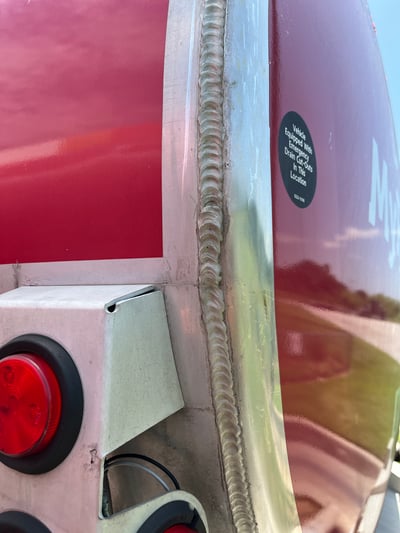
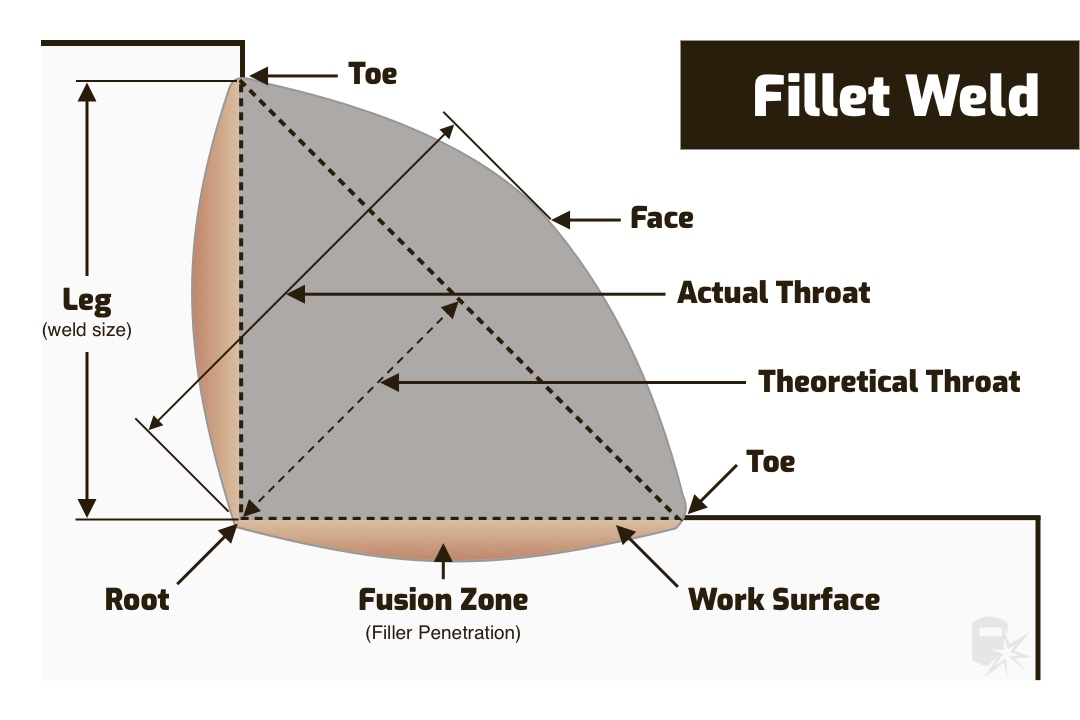
The graphics must be cut back from the "toe" of the weld.
-
The exposed edge of vertical overlaps must be facing the rear of the vehicle, while horizontal overlaps must be facing downwards.
-
All overlaps must be at least 1/2-inch.